By Lu, Huiting

The Guardian, 2022
Nowadays, in the era of technology and information, big data covers all over the world, ‘staring’ at human life. In the 21st century, no one can escape surveillance, and the conflict between surveillance and personal privacy has intensified due to the birth and development of social media (Lyon, 2014). Humans can not live without phones. However, the big data in the telephone stares at every user. Today, invisible surveillance appears everywhere. Most apps on your phone spy on you and then collect your data every moment, such as social media apps, TikTok, and some health apps.
TikTok is one of the most popular social platforms in today’s society. It is a short video creation platform, in which users can publish images, text, audio, and some short videos in tens of seconds (Peterson-Salahuddin, 2022). TikTok has a unique algorithmic system that can predict users’ preferences by tracking data like comments that users post, videos that users like, and the time that users stay in this video (TikTok, 2020). As you see, this is the charm of big data. By using the algorithmic system, TikTok can recommend the videos that users are interested in. This can be a form of surveillance.
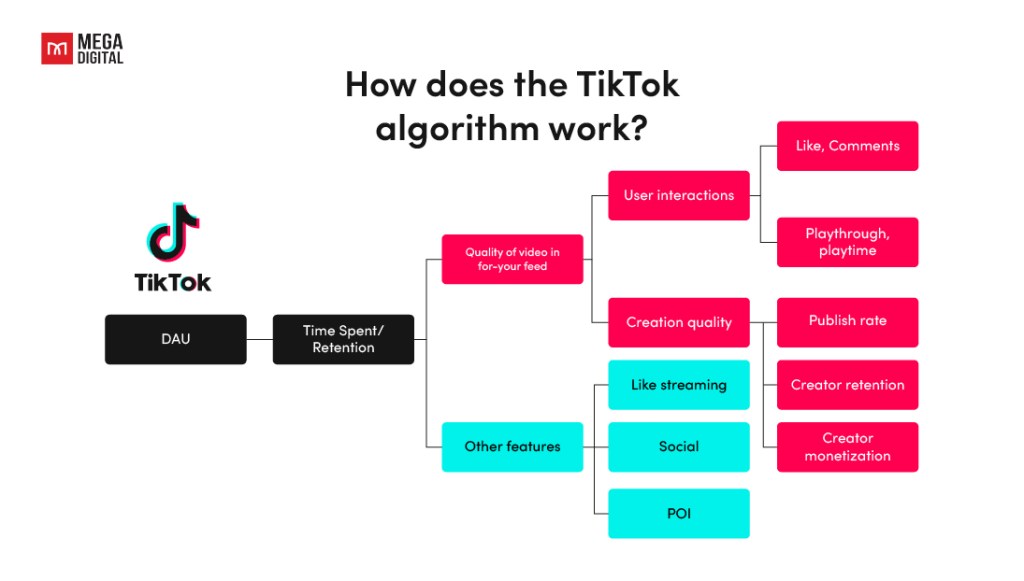
MEGA DIGITAL, 2024
In recent years, a large number of health apps have flooded into the market. Users only need to wear wearable devices such as watches, which can monitor users’ heartbeat, blood pressure, weight, and sleep condition. The data will be uploaded to health apps. Through monitoring these data, health apps will introduce the corresponding healthy diet and make a healthy life plan to make the user’s life more healthy. 2019 was the period of rampant COVID-19, this period also promoted the rapid development of information technology. The South Korean government has made it mandatory for every resident to download an app called Self-Quarantine Safety, which can constantly monitor the user’s physical condition, monitor whether the user is infected, and ensure whether the user is within the range in command ( Kang, 2020). The human body becomes a string of measurable data (Wolf and Kelly, 2007).
Team Tech Outlo, 2020
In the era of big data, the big data in mobile phones not only brings convenience to human life but also becomes a tool to monitor human life. However, the line between surveillance and privacy needs to be drawn. Technology companies must ensure that users’ privacy and data will not be leaked and that the way they obtain users’ information is legal and secure.
Reference List
/
Kelly, K. (2007) What is the Quantified Self? Available at: https://web.archive.org/web/20130125202220/http:/quantifiedself.com/2007/10/what-is-the-quantifiable-self/ [Accessed 4 November 2024].
Lyon, D. (2014) Surveillance and the eye of God. Studies in Christian Ethics, 27(1), 21–32. https://doi.org/10.1177/0953946813509334.
Peterson-Salahuddin, C. (2022) “Pose”: Examining moments of “digital” dark sousveillance on TikTok. New Media & Society, 26(5), 2387–2406. https://doi.org/10.1177/14614448221080480.
TikTok. (2020) How TikTok recommends videos #ForYou. Available at: https://newsroom.tiktok.com/en-us/how-tiktok-recommends-videos-for-you [Accessed 4 November 2024].

 EYEONTECH