By Guo, Ziyi
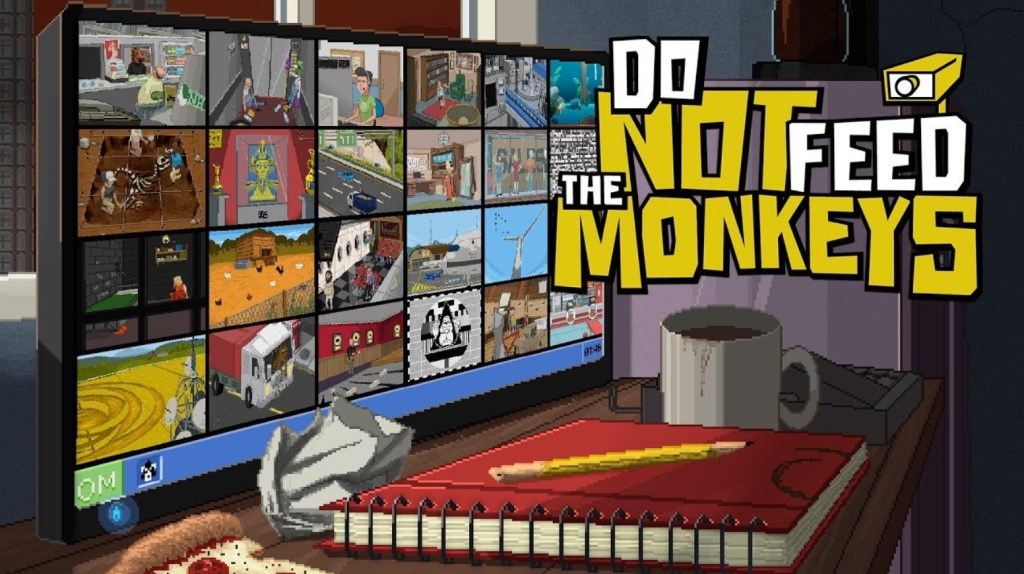
Life is about get a little meta…
This starting line of Do Not Feed the Monkeys (DNFTM) 2099, a Dystopian style, life simulation game, brings me straight back to the COVID-19 era, when I received three messages in a row, asking me to stay self-quarantined, and another series of messages me charging me a penalty for jaywalking on the second day, providing a complete set of evidence: time, location, VODs, photo of me with a clear view of my face even with my mask on.
I was completely shocked and traumatized since then. This feeling of being monitored just never fades away. When cameras and monitoring are everywhere in my life, the demand to keep some personal space is now more like a wish which will never come true, like an Orwellian society in 1984, based on a monitoring system of hyper-surveillance.
What can we do to go against Surveillance? How does surveillance work and who is behind the curtain? These questions are now frequently raised throughout the digital platforms, thanks to the rise of “the ninth type of art”: Video games. Producers are trying their best to explain and state themselves against surveillance, and the use of this concept in video games provides chances for players to experience the power and the existence of surveillance in a unique way.
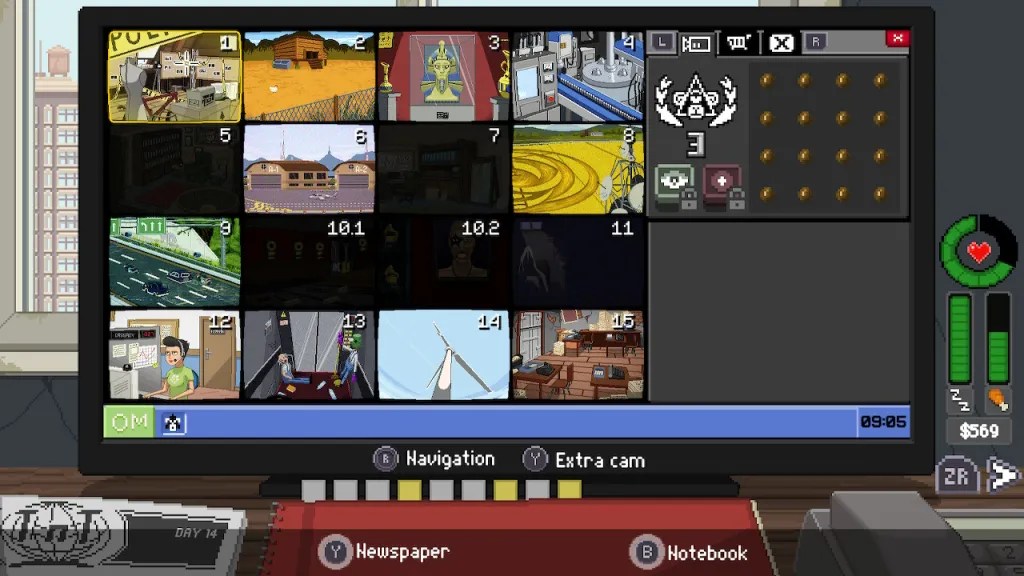
Rapid Reviews UK, 2020
In the DNFTM series, players are given access to hidden cameras to monitor other citizens’ lives via technology, which empowered the player to be able to effect, even completely change the life of the monitored citizens by “feeding the monkeys”. All the individuals in this story are set to act obedient in the dystopia world, just like Kang J. describing the Koreans during the COVID-19 era, they, by their own free will, accept an intelligence and merit-based social mechanism engineered by the state-of-art technologies. (Kang J.,2020) The game is trying to use these settings and the gameplays to warn the players that anyone could be the monitor, and everyone is some sort of “monkey”, that is monitored by someone else without being noticed.
Molina-Guzmán mentioned a quote from Stuart Hall when approaching studying ethnic and racial representations, saying that the media play a part in the formation, in the constitution, of the things that they reflect. (Molina-Guzmán, I., 2016) Video games, just like other digital media platforms, carry the same level of power. Meanwhile, by providing immersive gameplay experiences, players can understand and experience the core meanings hidden by the producers throughout the well-designed plot.
In Do Not Feed the Monkeys, players get to choose, either to interact with the individuals who are labeled as “monkeys” and trapped and monitored in the “cages”, or follow the instructions provided by the in-game monitoring technology provider, “Do not feed the monkeys” and leave them alone. Most of the decisions the players made would affect the endings of each “cage”, and how much the players get to know about the whole in-game world when they finish the game.
Reference List
/
Kang, J. (2020) ‘The Media Spectacle of a Techno-City: COVID-19 and the South Korean Experience of the State of Emergency’, The Journal of Asian Studies, 79(3), pp. 589-598. Available at: https://doi.org/10.1017/S0021911820002302.
Molina-Guzmán, I. (2016) ‘OscarsSoWhite: how Stuart Hall explains why nothing changes in Hollywood and everything is changing’, Critical Studies in Media Communication, 33(5), pp. 438-454. Available at: https://doi.org/10.1080/15295036.2016.1227864


 EYEONTECH